NICU Nurse, Mama Heart. Here for every tiny step.


First- what even is the NICU?
NICU stands for Neonatal Intensive Care Unit. It’s a special place in the hospital where babies go for all kinds of reasons. The “ICU” part can sound intimidating, like it’s only for the sickest babies—but that’s not usually the full picture. Most babies who spend time in the NICU go home healthy, and later on, you’d never guess they ever needed that extra support.
Not every NICU is the same, either. Some NICUs care for babies who are a little early or just need a bit of extra monitoring and support. These are often called Level I or Level II NICUs, and babies there may not need as much intervention or a long stay.
Other NICUs are equipped to care for babies who are very early, very sick, or need more complex support. These are typically Level III or Level IV NICUs. Some of these units are specially designed to care for babies who may need surgery or highly specialized treatments.
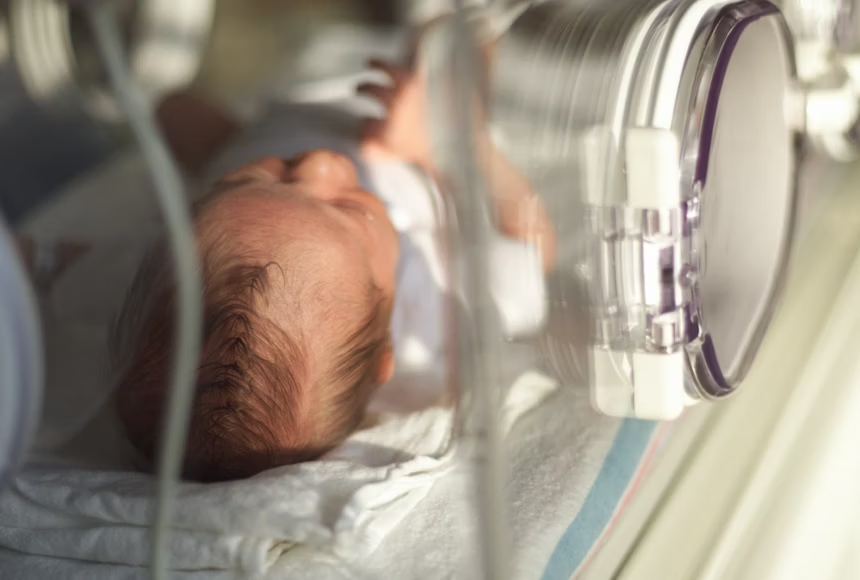
Reasons Babies go the NICU
The most common reason babies come to the NICU is being born early, also known as prematurity. Some arrive just a few weeks ahead of schedule, while others are in a bit more of a hurry and come months early. The tiniest babies can be born as early as 22–23 weeks (when a full pregnancy is around 40 weeks). Because lungs are one of the last things to fully develop, many premature babies need a little help with breathing. That support can range from a ventilator, to CPAP, to just a bit of extra oxygen through a tiny tube in their nose.
Premature babies often need help with feeding too. That might mean IV fluids at first, then feeding tubes while they learn how to eat on their own. And some babies? They come early and act like they totally meant to—breathing well, eating well, just needing a little time to grow and catch up. Most NICUs keep a close eye on babies until they’re around 35 weeks (adjusted age), about 4 pounds, and doing well with feeding, growing, and staying warm.
And it’s not just premature babies in the NICU. Full-term babies can need support too. Adjusting to life outside the womb is actually a pretty big job. One minute, everything is being done for you automatically… the next, you’re expected to breathe, eat, regulate your blood sugar, and handle the world on your own. It’s kind of amazing any baby pulls it off as smoothly as they do.
Babies can also come to the NICU for more serious situations, like complications during delivery or conditions that may require surgery.
A Place of Miracles
The NICU can feel overwhelming—there’s no sugarcoating that. It’s not where any parent expects or wants their baby to be. But if your baby does spend time there, you’ll quickly see just how strong and determined they are. There are so many moments to celebrate, big and small. Some days it’s a tiny win, like needing a little less heat in the incubator. Other days it’s huge—like coming off a breathing machine. First outfits, first feeds, first time being held, moving to a crib—these moments matter, and they add up.
It’s also completely normal to feel a wide range of emotions during a NICU stay. You might feel hopeful one moment and overwhelmed the next. You might feel strong, and then suddenly very tired. All of those feelings are valid.
This is not the start most parents picture, and it’s okay to acknowledge that. At the same time, many families find strength they didn’t know they had, and they build a deep bond with their baby through this experience.
The NICU journey can feel like a roller coaster, with ups and downs along the way. But even on the harder days, there’s often something worth holding onto.
No matter why a baby goes to the NICU, they all have one thing in common: they are incredibly strong, resilient, and full of fight.
